

CBO Projects More Deaths Than Births Among the Native-Born Population in 2030
Population expected to contract in 20 years

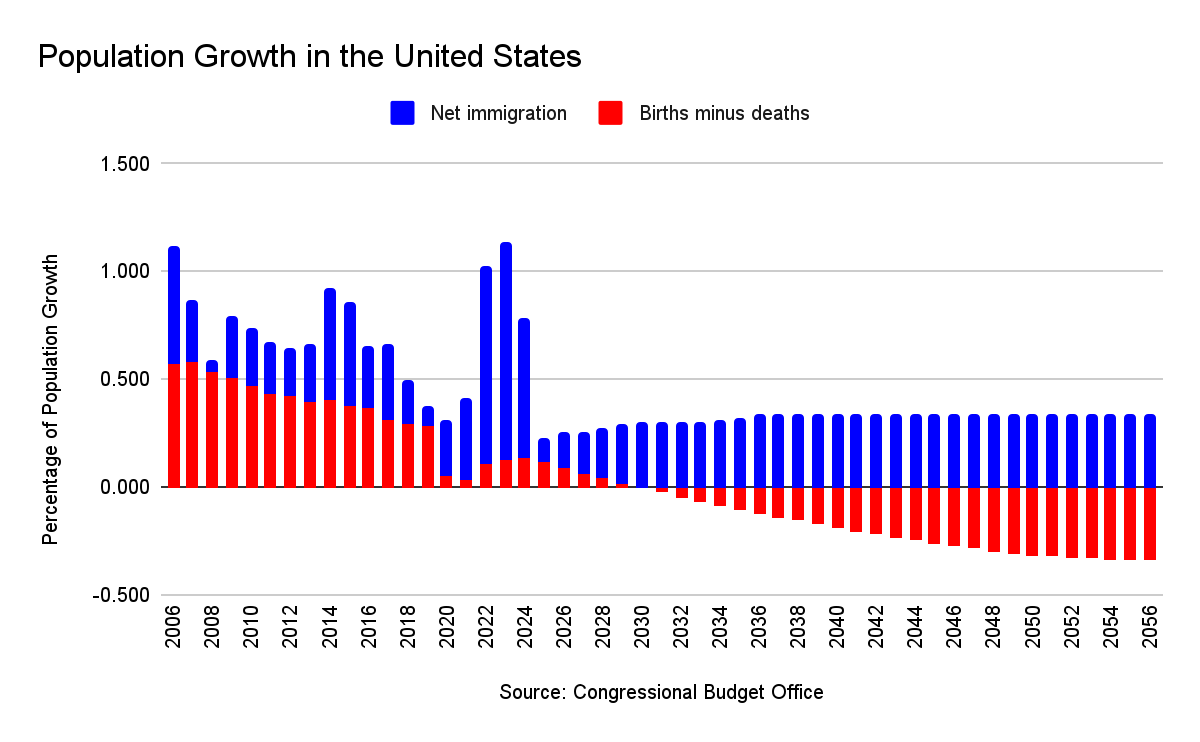
The United States will see more deaths than births among the native-born population beginning in 2030, according to an update on demographic projections from the Congressional Budget Office (CBO). The latest projections also show that the nation’s population will begin to decline in 2056.
Since March 2021, the CBO has regularly published demographic projections. The report released on Wednesday is the seventh in the series and the third since January 2025. The initial report in March 2021 projected that deaths among the native-born population would outpace births in 2044. The July 2022 iteration projected that the year with more deaths than births would shift to 2043. It was 2042 in the January 2023 update, 2040 in January 2024.
The January 2025 report included a major revision, projecting that by 2033, the United States would see more deaths than births among the native-born population. In September 2025, because of the Trump administration’s immigration enforcement actions, the CBO released an update. This update revised the year to 2031. The report released on Wednesday revised the year again, this time projecting the United States will see more deaths than births among the native-born population in 2030.
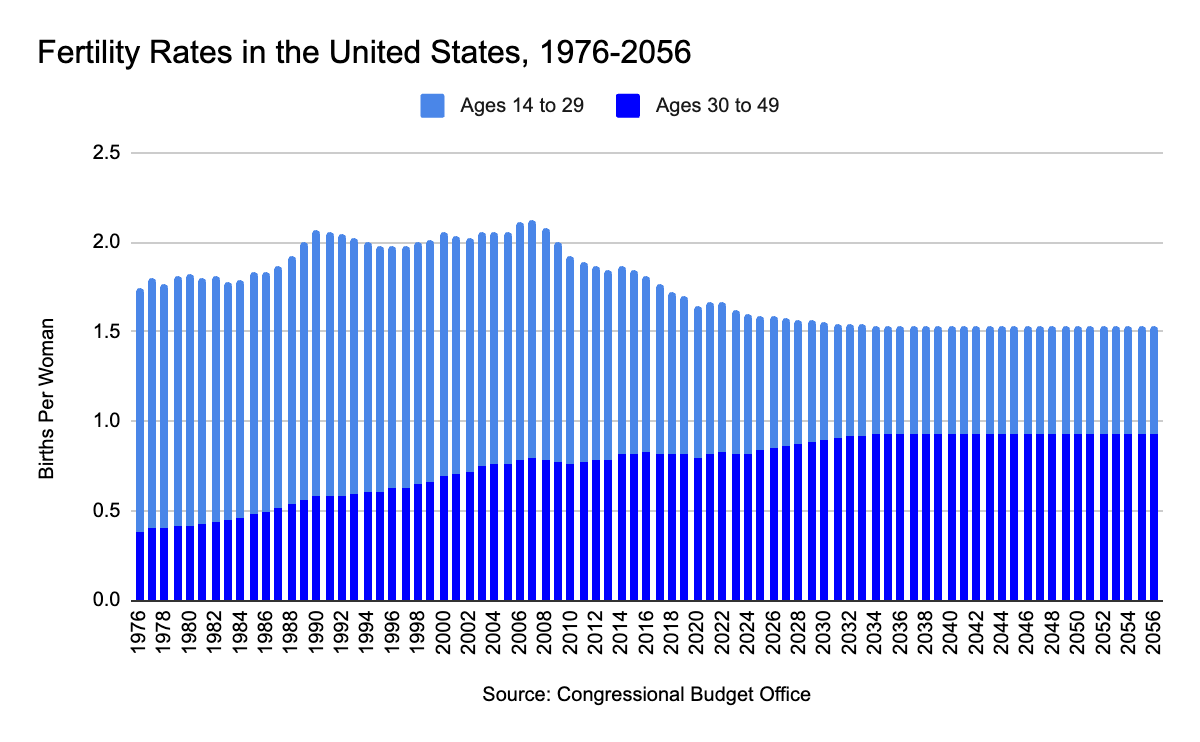
As noted in previous pieces, the United States requires 2.1 births per woman to sustain the population. The CBO projects that the fertility rate will remain at 1.6 births per woman through 2030. In 2031, and through the remainder of the projections, the fertility rate is expected to be 1.5 births per woman. The population of the United States will begin to contract in 2056. One path to avoid the inevitable contraction in the population is to begin allowing more immigration to the United States, including making the pathway to citizenship easier.
If the United States actually enters a period of population decline in 2056, it will mark a quiet but profound break in the country’s economic and political history. A shrinking population means a shrinking labor force, a narrowing tax base, and an expanding population of retirees drawing on programs built for a growing society. Growth will slow not because of recession or crisis, but because the math no longer works in America’s favor. Fewer workers will be asked to support more dependents, public finances will tighten even as demands on them rise, and entire regions will begin to hollow out as younger people concentrate into fewer and fewer economic centers.
The risk is not collapse. No, the risk is a slow slide into stagnation, fiscal brittleness, and diminished national capacity, where the country finds itself perpetually trying to manage decline. It’s a problem that nearly every modern economy is experiencing, and it means the world will look drastically different in terms of where power will be held in the coming decades as these shifts take place. Some of the population decline can be mitigated through advances in technology, but automation and artificial intelligence cannot fully substitute for a shrinking workforce, a narrowing tax base, or the social and political strain of an aging society. Technology can raise productivity, but it cannot create consumers, taxpayers, or communities.
That leaves immigration as one of the only remaining levers capable of counteracting demographic contraction. Not as an act of generosity, not as a cultural gesture, and not as a partisan concession, but as an economic imperative. If the United States continues to treat the modernization of immigration laws and the expansion of immigrants who come into the country as a symbolic battlefield rather than a structural tool, it will, by default, choose stagnation. We don’t need more nationalistic and nativist slogans about borders. We need a system capable of replenishing its workforce, stabilizing its population, and sustaining the economic base on which its institutions can depend. The modernization of our Immigration is no longer a matter of preference; it’s a matter of national urgency.
I realize that population demographics tend not to get a lot of attention outside the far-right ecosystem, where white nationalists promote conspiracy theories like the racist “Great Replacement.” The United States has experienced significant changes in racial demographics. In 2000, nearly 70 percent of the United States population was white, or 195.7 million people. As of 2024, the white population accounted for roughly 58 percent of the total population, or approximately 195.6 million people. The stagnant growth and decline of the white population is a result of low fertility rates and aging.
None of this is offered as a warning, a lament, or a cultural diagnosis. It is simply a statement of demographic fact. The decline in the white population is not a threat to be feared, a loss to be mourned, or a political problem to be “solved.” It’s the predictable result of fertility rates, aging, and time. However, the broader demographic slowdown it reflects does pose a real economic challenge.
A nation with fewer workers, fewer taxpayers, and a rising dependency ratio cannot sustain the same level of growth, innovation, or fiscal stability without adjusting its policies accordingly. If the United States wants to remain economically dynamic in an era of low fertility and population aging, it will need to do what growing economies have always done: welcome people. Expanding and rationalizing legal immigration is not a concession to cultural change; it’s an investment in economic continuity.